
Bubble bath: the secrets of generous foam, delicate fragrances and gentle care
Bubble bath combines cleansing, pleasant fragrance and abundant foam on contact with water. Explore how it works, usage considerations, surfactant-base composition, bubble stability, skin-care ingredients, manufacturing technology and own-brand contract manufacturing.
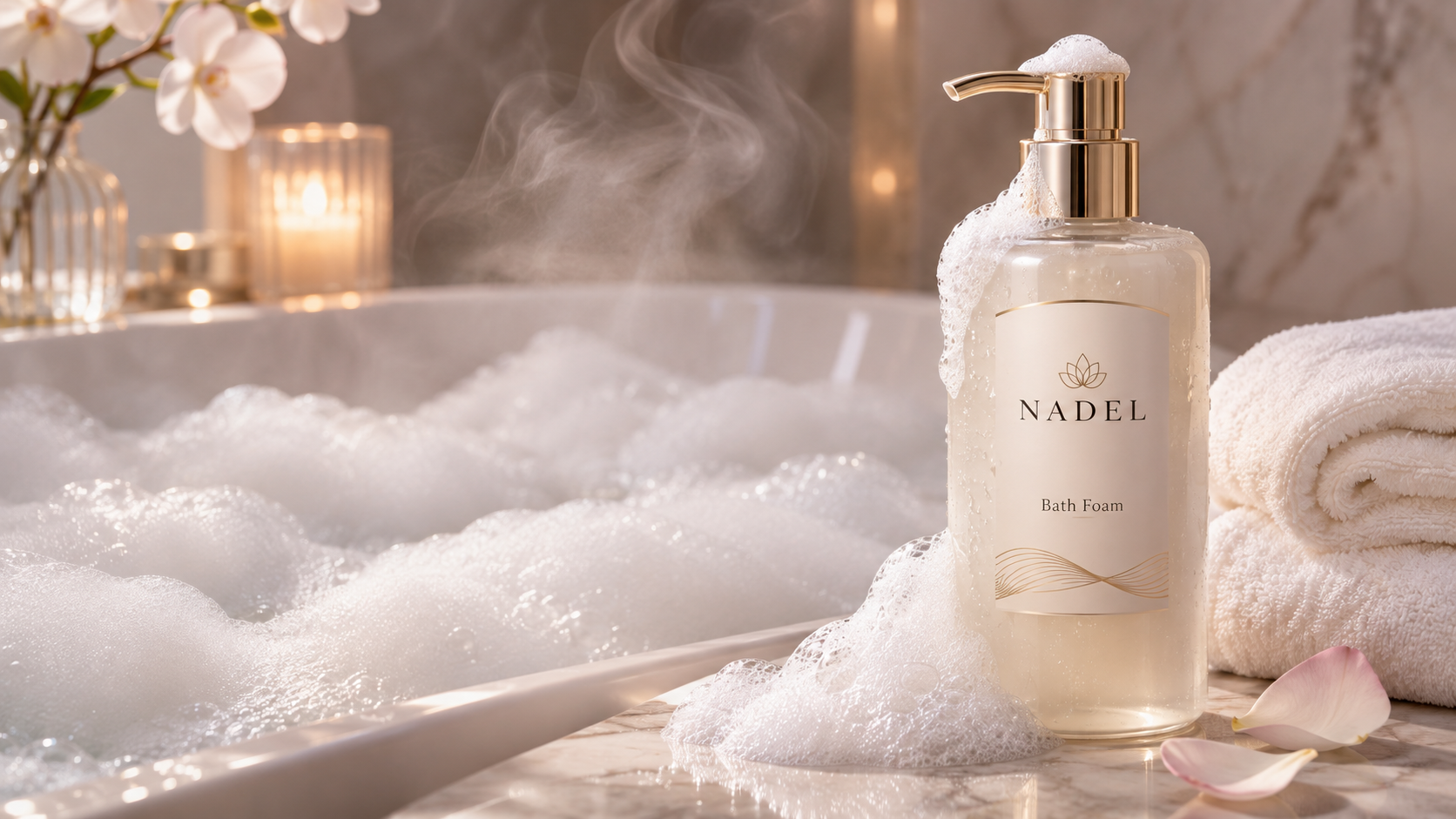
Bubble bath: combining generous foam, fragrance and skin care
Bubble bath is a cosmetic product that creates abundant scented foam when mixed with water and helps cleanse the skin. It combines everyday bathing with the pleasant sensations of soft bubbles, warm water and a chosen fragrance. Depending on its formula, the product can produce dense, creamy or lighter airy foam that gradually spreads across the water's surface.
Bubble bath reveals its main properties through contact with water. Adding and mixing the product creates plentiful foam made of bubbles differing in size, density and stability. At the same time, the fragrance gradually fills the bathroom, while cosmetic ingredients influence how the skin feels during bathing.
Behind this apparently simple product is a carefully designed cosmetic formula. The combination of surfactants, foam stabilisers, skin-care ingredients, fragrance and supporting components defines the finished product. Brands can create own-label bubble baths with individual scents, textures and presentation.
Bubble bath in everyday care
Bathing combines skin contact with water, cleansing and pleasant sensory experiences. Scented foam complements this process with a soft layer of bubbles on the water and a particular bathing atmosphere.
Some consumers prioritise abundant foam; others value fragrance, formula mildness or after-feel. A well-developed product can bring these properties together in a balanced formula.
Bubble bath is used at home and in appropriate hotel and spa cosmetic formats. It can be a standalone product or part of a bathroom collection sharing a fragrance and visual concept.
Fragrance, colour, consistency and foaming behaviour shape the overall experience. Consumer value depends on comfortable use and formula properties as well as the quantity of bubbles.
How bubble bath differs from shower gel
Bubble bath and shower gel are foaming cleansing cosmetics. They may contain related ingredient groups but have different intended uses and finished-product requirements.
Shower gel is generally applied directly to the skin or a washing accessory, spread and rinsed off. Cleansing performance, slip, consistency and rinsing behaviour are particularly important.
Bubble bath is usually added while filling the bath. It is therefore diluted in much more water, and a key functional property is its ability to form and sustain a substantial foam layer.
Development consequently pays particular attention to foaming capacity, bubble stability, fragrance perception and the diluted formula's properties.
The products can share ingredients, but concentrations, ratios and assessment criteria are defined for each intended use.
How foam forms: from cosmetic liquid to bubbles
Foaming involves water, air and surface-active agents, or surfactants. They create conditions in which thin liquid films can hold air inside, forming many bubbles.
When added beneath running water, the product gradually disperses. Water movement incorporates air, while surfactants help form and stabilise the surfaces of new bubbles.
Surfactant molecules have regions with different properties: one interacts with water, the other with non-polar environments and interfaces. This structure allows them to lower water's surface tension and alter the liquid film's behaviour at the air boundary.
The resulting foam contains many air cells separated by thin liquid layers.
Liquid gradually drains from bubble walls, individual cells merge or collapse, and foam volume decreases. The rate depends on product composition, temperature and water properties.
Rapid foam formation and retention of foam volume over time are therefore related but distinct characteristics.
Foam volume, density and stability
Several characteristics are used to assess bubble bath, together defining its consumer properties.
Foaming capacity describes how much foam forms when the product is mixed with water and air under defined conditions.
Foam density and structure describe the bubbles and their arrangement. Small, relatively uniform bubbles can feel creamier, while larger cells create a lighter, airy structure.
Foam stability describes how quickly volume decreases after formation. It depends on the surfactant system, supporting ingredients and usage conditions.
Consumers experience these characteristics together: foam should form conveniently, have a pleasant texture and retain its desired character during the bath.
Development assesses initial volume and how structure and stability change over a defined period.
How temperature, water hardness and pouring affect foam
The same bubble bath can behave differently depending on usage conditions. Water temperature and mineral content, flow strength and the amount added influence the result.
Water temperature changes the liquid system's physical properties and can affect foam formation and breakdown. The particular effect depends on surfactant composition.
Water hardness mainly relates to calcium and magnesium salts. These can influence certain surfactants and alter foaming. Formulas should therefore be assessed in laboratory water and under conditions close to their intended use.
Mixing intensity determines how much air enters the water. With the same amount of product, stronger water movement may produce a different initial bubble volume.
Dilution also matters. Adding the product to a bath significantly reduces active-ingredient concentrations, so foam performance must be evaluated with this process in mind.
The result comes from the formula and real usage conditions, rather than the thickness of the liquid in its bottle alone.
Bubble-bath ingredients: which components determine its properties?
A typical formula includes an aqueous base, surfactants, ingredients that regulate structure and stability, fragrance, a preservative system and other components suited to the product's purpose.
Some ingredients generate foam; others affect cleansing, consistency, fragrance or skin comfort. Formulation aims to coordinate these functions within one stable cosmetic product.
Surfactants: the basis of foaming
Surfactants are bubble bath's key functional ingredient group. They generate bubbles and help cleanse skin through their ability to interact with water and soiling.
Cosmetic formulas use several main surfactant groups, individually or in combinations.
Anionic surfactants are widely used in foaming cleansers for their cleansing and foaming properties. Sodium Laureth Sulfate is one example that may be used in suitable cosmetic systems.
Amphoteric surfactants, including Cocamidopropyl Betaine, are often combined with other surfactants. They can influence foam structure, viscosity and the finished formula's overall characteristics.
Non-ionic surfactants such as Decyl Glucoside or Coco-Glucoside are also used in cosmetic cleansing systems. Selection considers compatibility, required cleansing properties and foam behaviour.
Combining surfactant types allows bubble volume, density and stability to be adjusted, along with cleansing behaviour and skin feel.
Finished-product properties are not determined solely by the name of one surfactant. Its concentration, ratio to other substances, pH and the whole system's behaviour after dilution also matter.
Ingredients for mildness and skin comfort
Bubble bath contacts the skin throughout bathing, so development considers formula mildness and after-feel as well as foaming.
Moisturising, softening and other functional ingredients compatible with the foaming cleansing system may be used for this purpose.
Glycerin has hygroscopic properties and is widely used as a moisturising ingredient in cosmetic formulas.
Panthenol may be included to support skin comfort and complement the formula's moisturising components.
Betaine is used for water-retaining and conditioning properties. Despite the similar names, its function differs from the amphoteric surfactant Cocamidopropyl Betaine.
Specialised emollients, plant extracts and other skin-care ingredients may also be used.
Bubble bath is diluted in water and generally rinsed off after bathing. Skin-care properties must therefore be assessed in the finished formula under realistic usage conditions.
This allows brands to create products combining generous foam with comfortable cleansing and pleasant skin feel.
Fragrance composition: from first impression to scent during bathing
Fragrance is among bubble bath's most noticeable features. It is perceived when the bottle opens and gradually spreads through the bathroom after the product is added to warm water.
Different fragrance moods can use white flowers, fresh green tea, ripe pear, coconut, creamy vanilla or juicy berries. Combining individual accords allows light, delicate compositions or richer scents.
Transparent floral nuances can be complemented by a soft musky base, for example, while fruity notes can gain warmth through vanilla or creamy accords. Ingredient balance determines the overall impression.
Assessment must cover the concentrated product and its fragrance after dilution in warm water. Some volatile substances may be more noticeable initially, while other nuances remain perceptible for longer.
The fragrance must also suit the surfactant system. It can affect clarity, viscosity and stability, so its behaviour is checked in the finished formula.
Selection considers International Fragrance Association (IFRA) standards. Bubble bath added to bathing water falls within IFRA category 9. The permitted concentration of a specific fragrance is determined from current composition documentation and the relevant finished-product requirements.
Fragrance can underpin a cosmetic product's identity, connecting formula properties with the future brand's character.
Consistency, colour and supporting ingredients
Bubble bath can be a liquid or gel-like cosmetic mixture. Consistency affects dispensing, appearance and how it mixes with water.
Viscosity modifiers create the required thickness. Sodium Chloride and other ingredients can be used in certain surfactant systems, but their effectiveness depends on the whole formula.
Solubilisers help integrate fragrance and supporting ingredients into the aqueous base. Their selection can affect clarity, stability and other product properties.
pH adjusters, including Citric Acid in suitable formulas, establish the acidity required for stability and intended use.
Colourants can emphasise the fragrance concept and create a recognisable appearance. A transparent blue or delicate peach shade may form part of the design, for example. Colour stability and ingredient compatibility must be checked.
Ingredients affecting transparency or pearlescence may be used for a particular visual effect.
The concentrated liquid's appearance and foam properties after adding water are assessed separately, because composition can affect them differently.
Preservation and formula stability
Most liquid and gel bubble baths contain substantial amounts of water, making microbiological protection and physicochemical stability important during development.
The preservative system is selected with regard to surfactant composition, pH, fragrance, packaging and expected usage conditions.
Antimicrobial protection can be assessed using appropriate methods, including ISO 11930; microbiological quality criteria for cosmetics can refer to ISO 17516.
Physical stability includes maintaining the required uniformity, colour, fragrance, clarity and consistency throughout the established shelf life.
Interactions with bottle, closure and other component materials are checked separately.
Finished-product stability depends on formulation and process decisions verified during development and preparation for commercial production.
Bubble-bath texture: shaping the consumer experience
The first impression begins before use. Liquid appearance, colour, fragrance on opening and ease of pouring all matter.
After contact with water, other characteristics become prominent: bubble formation speed, foam volume, softness, density and duration.
A liquid formula may mix easily with running water, while a thicker gel dispenses differently. Concentrate consistency alone does not automatically determine foaming performance.
Fragrance perception is also important. Foam can provide a pleasant aromatic background that complements bathing and matches the cosmetic range's character.
Development also assesses after-bath sensations: ease of rinsing, skin comfort and agreement with the specified characteristics.
The sensory profile combines the bottled product's properties, foaming behaviour and sensations during use.
How to use bubble bath
Bubble bath is usually added while the bath fills. Adding it under running water helps provide the mixing and air incorporation needed for abundant foam.
Use the quantity specified by the manufacturer. This depends on formula concentration, water volume and desired foaming intensity.
Use water at a comfortable temperature. Excessively hot water and prolonged bathing can contribute to dryness, so conditions should be adapted to individual needs.
After bathing, rinse with clean water if needed and complement the routine with an appropriate body cream or lotion.
For sensitive skin, individual tolerance of fragrance and cleansing ingredients is particularly important. If prone to irritation, select products according to professional advice.
Avoid getting the concentrated product in the eyes and follow the manufacturer's application and storage instructions.
Bottle and packaging: convenience and design
Packaging affects dispensing convenience, storage and the overall visual impression.
Liquid and gel products can use plastic bottles with a cap, flip-top or suitable dispensing system. The format is selected according to viscosity and expected use.
A capped bottle allows the product to be poured directly into water. For thicker formulas, neck design and ease of pouring matter.
A pump bottle can be used for appropriate formulas if dispensing suits the viscosity and intended application.
Container selection checks formula compatibility, seal integrity, closure reliability and decorative finish stability.
Design may include different bottle shapes, container colours, printing, labelling, decorative elements and individual boxes.
A cosmetic collection needs consistency between fragrance direction and presentation. Shared colours, naming and packaging help connect bubble bath with other body-care products.
Packaging is selected alongside the formula to provide convenient use and the required finished-product characteristics.
How bubble bath is manufactured: the production process
Manufacturing involves preparing the aqueous base, incorporating surfactants and supporting ingredients, establishing consistency and filling the finished cosmetic liquid.
Processing conditions depend on formula composition, raw material properties and the finished-product characteristics.
Raw material and water preparation. Surfactants, skin-care ingredients, fragrance, colourants and other components are checked before manufacture. Production water must meet the established quality requirements.
Preparing the aqueous base. The base is prepared in the manufacturing vessel according to the formula and processing instructions. Required temperature and mixing parameters are defined.
Adding surfactants. They are incorporated in the specified order, controlling distribution and mixture uniformity. The tendency of cleansing systems to form unwanted foam during manufacturing mixing must be considered.
Adding supporting ingredients. Components providing consistency, skin-care properties and other characteristics are introduced. Addition order accounts for compatibility and formula specifics.
Adding fragrance. The fragrance compound is introduced under conditions ensuring even distribution. Its effects on clarity, viscosity and other product characteristics are then assessed.
Adjusting consistency and pH. Where needed, specified operations establish the required values. Viscosity adjustment must preserve the necessary stability and foaming properties.
Assessing the finished mixture. Before filling, appearance, uniformity, colour, fragrance, pH, viscosity and other specification parameters are checked.
Filling and packaging. After the required checks, the product is dispensed into the agreed containers, closed, labelled and assembled for storage and sale.
Commercial production needs a stable foaming cleansing system and reproducible characteristics between batches.
Bubble-bath quality control
Quality assessment covers physicochemical, microbiological, sensory and functional parameters. Tests evaluating behaviour after dilution are particularly important.
The main control areas include:
- Appearance and uniformity. Correct colour, transparency or intended opacity, and absence of unwanted structural changes.
- Viscosity. Consistency matching the approved sample and dispensing method.
- pH. Control of the specified formula characteristics and their stability.
- Foaming capacity. Initial foam volume under defined mixing conditions with water.
- Foam stability. Measuring the change in foam-layer volume over a specified time.
- Bubble structure. Assessment of density, uniformity and foam character.
- Fragrance profile. Agreement with the approved sample in concentrated form and during use.
- Physical stability. Retention of required characteristics during storage.
- Microbiological quality. Compliance with established criteria and assessment of antimicrobial protection.
- Packaging compatibility. Interaction between the formula and container or component materials.
Foaming comparisons can use laboratory methods involving standardised mixing of a solution with air and measurement of the resulting foam height or volume.
The Ross–Miles method is one approach used in surfactant-system research. It helps compare foaming characteristics under controlled conditions, although it does not reproduce every aspect of actual bathing.
Testing should consider concentration after dilution, water temperature and hardness, and foam formation conditions. This provides comparable results for evaluating different formulas.
The relationship between foaming and skin comfort receives separate attention. High foam volume alone does not prove cleanser mildness or the effectiveness of skin-care ingredients; those properties require additional assessment.
Shelf life is established for the specific formula from the required tests, packaging and defined storage conditions.
Comparison with an approved sample helps maintain consistent foaming, fragrance and other properties across repeat batches.
Own-brand bubble-bath contract manufacturing
Creating own-brand bubble bath begins by defining its purpose, desired properties and overall concept.
Contract manufacturing brings together formulation, samples, fragrance selection, quality control, packaging design and commercial production through cooperation with a specialist manufacturer.
For a brand, this is an opportunity to create distinctive foam, fragrance, consistency and presentation while considering audience expectations and the future range's commercial parameters.
Product concept and technical brief
The first stage defines the main requirements for the future bubble bath.
The brief may specify:
- Product purpose and target audience.
- Desired foam volume, density and stability.
- Cleansing and skin-care characteristics.
- Liquid or gel-like consistency.
- Fragrance direction and desired scent intensity.
- Colour, clarity and other appearance characteristics.
- Preferences for cosmetic ingredients.
- Bottle format, dispensing method and packaging design.
- Planned production quantity and target manufacturing cost.
- Market and sales channels.
A bath-care collection might prioritise distinctive fragrance, abundant foam and coordinated presentation across several products. A professional or hotel range may also value compact packaging, convenient dispensing and consistent properties during regular use.
An overall product vision is sufficient initially. Surfactant-system composition, ingredient concentrations and specific processing solutions are defined during subsequent development.
Formula development and laboratory samples
Once the technical brief is agreed, the formula development approach is chosen.
Depending on the project, an existing formulation may be adapted or an individual bubble bath developed with the required characteristics.
Laboratory work establishes the surfactant system, skin-care and supporting ingredients, fragrance and desired consistency.
Samples allow assessment of liquid appearance and the actual foam volume, structure and stability after adding the product to water.
Testing may lead to adjustments in surfactant ratios, viscosity, fragrance and other parameters until the agreed characteristics are achieved.
Formula stability and compatibility with the planned packaging are assessed in parallel.
Design, bottle and components
Finished-product appearance is developed alongside the formula.
This defines bottle shape and capacity, container material, cap or dispenser construction, decoration, label and individual packaging.
A scented collection can share design elements, names, colours and packaging shapes to form a recognisable range.
Material selection checks formula compatibility, seal integrity, functional construction and reproducibility in commercial production.
Thoughtful design brings fragrance, appearance and purpose together into a coherent product.
Product approval and commercial production
After development, the customer approves the final bubble-bath sample and finished-product components.
The sample establishes formula composition, main physicochemical and sensory properties, foaming requirements, filling and packaging parameters.
These details are used for the manufacturing specification and processing documentation.
Raw material and component purchases, mixture preparation, specified checks, filling, labelling and packaging are then organised.
The customer needs a finished own-brand product with the agreed characteristics and required components.
Bubble-bath production quantities and costs
Contract manufacturing planning defines mixture mass or volume, filling format, number of saleable units and target manufacturing cost.
The main cost elements are:
- Surfactant system. Surfactant types, ratios, concentrations and raw material costs.
- Skin-care ingredients. Moisturising, softening and other functional components.
- Fragrance composition. Ingredients, concentration and purchasing terms.
- Supporting components. Viscosity and pH adjusters, solubilisers, colourants and the preservative system.
- Container and components. Bottle, closure, dispensing and protective elements.
- Design and branding. Labelling, printing, decorative presentation and individual solutions.
- Individual and transport packaging. Boxes, protective elements and additional components.
- Manufacturing processes. Mixture preparation, mixing, quality control, filling and packaging.
- Development and documentation support. Work needed to prepare the new product for sale.
Final cost also depends on formula complexity, bottle selection, the number of fragrances, production quantity and packaging customisation.
Commercial planning should assess the full cost of the finished saleable unit, including formula, container, labelling and agreed components.
Minimum production quantity and specific order terms are defined individually according to formula, packaging format and project characteristics.
Bubble-bath safety, labelling and documentation
Bubble bath is a cosmetic used during bathing and rinsed off with water. Development therefore considers ingredient and finished-formula safety, labelling and intended-use requirements.
In Ukraine, the relevant requirements are set by the Technical Regulation on Cosmetic Products, approved by Cabinet of Ministers Resolution No. 65, taking account of its current version and transitional provisions.
Formula documentation, the INCI ingredient list, required test results and labelling are prepared for the product. Under applicable requirements, documentation includes a Product Information File (PIF), Cosmetic Product Safety Report (CPSR) and the relevant notification procedure.
Good manufacturing practice principles in GMP ISO 22716 are important, covering manufacturing processes, control, storage and shipment of cosmetics.
Fragranced products consider composition documentation, including an IFRA Certificate and Allergen Declaration. These help determine usage conditions and prepare ingredient and labelling information.
Claims are assessed separately. Statements about foam stability, mild cleansing, moisturising or other specific properties must match the finished formula and have appropriate supporting evidence.
Comprehensive documentation support helps agree composition, packaging, labelling and sales conditions for own-brand bubble bath in advance.
From one fragrance to your own bath-care collection
Bubble bath can be a standalone branded product or part of a wider collection. Variations in fragrance, colour, consistency and foam character open opportunities for a recognisable range.
One series may include several fragrances sharing a design concept. Different colour accents and names highlight each product while retaining a coherent collection.
Another direction is a complete bath-and-shower range in which bubble bath complements shower gel, liquid soap, body scrub or lotion.
These products have different purposes but can share a fragrance direction, naming system and packaging design.
Each category needs its own formulation approach. Bubble bath is designed to create a substantial foam layer after dilution, while shower gel and liquid soap have different application conditions and cleansing-system requirements.
For a brand, a shared fragrance and visual concept supports gradual range expansion with products for everyday and additional body care.
NADEL: own-brand bubble-bath contract manufacturing
NADEL is a Ukrainian manufacturer of perfume, cosmetics and fragrance products, specialising in contract manufacturing for brands, entrepreneurs, distributors and corporate customers.
Bubble bath forms part of NADEL's manufacturing range alongside liquid soaps, shower gels and other foaming cleansers and skin-care cosmetics.
The company combines laboratory, formulation and manufacturing expertise to provide a comprehensive approach to own-brand cosmetic creation.
Cooperation may cover concept development, formula creation or adaptation, selection of cleansing and skin-care ingredients, fragrance creation, laboratory samples, container selection, filling, packaging and preparation of required documentation.
A complete bubble-bath contract manufacturing service combines formulation, processing and finished-product assembly within one manufacturing project.
To begin, define the main preferences: foam character, fragrance, consistency, colour, skin-care properties, bottle format, planned quantity, price positioning and sales market.
A ready-made formula or finally approved design is not essential initially. These can be developed and agreed with the company's specialists during product creation.
To discuss creating your own bubble bath or launching a cosmetic collection under your brand, complete the brief on NADEL's official website. Based on your concept, the team will help identify possible formula, fragrance and design solutions, components and individual manufacturing terms.